
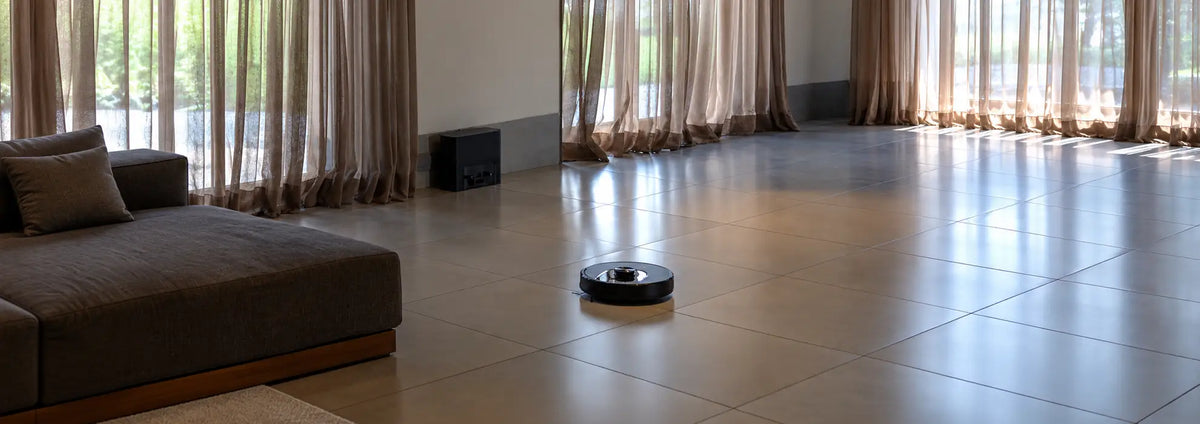
A floor cleaning robot in India is worth buying when your home has mostly hard floors, a layout it can move through freely, and a daily cleaning routine you would happily hand over. It is not worth buying if you expect it to replace a proper deep clean, or if your floors are crowded with cables, tassels and thick rugs. The price tag matters less than whether the machine matches your home. This guide shows you how to judge that before you spend.
What Is a Floor Cleaning Robot?
A floor cleaning robot is a self-driving machine that sweeps, vacuums or mops your floors on a schedule or at the tap of a button. Most models sold in India today combine vacuuming and light mopping in one unit. Some add a dock that empties the dust bin, and a few also wash and dry the mop pads.
It is best understood as a daily maintenance tool. It keeps dust from building up between manual cleans. It does not replace a thorough weekly wash.
How Does a Floor Cleaning Robot Work?
The process is simple, and the quality of each step decides how good the result is:
- Sensing. The robot reads the room using a laser turret (LiDAR), a camera, or basic bump and drop sensors.
- Planning. Better models build a map and clean in neat, overlapping rows. Basic ones bounce around in set patterns.
- Cleaning. Brushes lift dust into the bin while suction pulls in finer particles. In mopping models, a damp pad wipes the floor behind.
- Returning. When the battery runs low, it goes back to the dock to charge, and many models resume where they stopped.
When Is a Floor Cleaning Robot Worth Buying in India?
Ask yourself four questions. If you answer yes to most, it is worth it.
- Do you have mostly tile, marble, vitrified or wooden floors? Robots perform best on hard, flat surfaces.
- Is dust a daily problem? Indian homes collect fine dust quickly, so daily pickup is where a robot earns its place.
- Can your floor be kept reasonably clear? Toys, chargers, slippers and loose cables slow a robot down.
- Do you value time over perfection? A robot gives you consistently clean floors, not a spotless, scrubbed finish.
A simple way to judge value is to look at what you spend on cleaning help or lose in time. For example, if a robot costs ₹30,000 and cuts ₹1,000 a month from extra cleaning help or your own time, it pays back in roughly 30 months. This is only an illustration, so use your own numbers. If you gain no real saving or comfort, the robot is a gadget, not a good purchase.
How to Choose a Floor Cleaning Robot in India
Navigation and Mapping
This matters more than almost any other spec. Basic gyroscope models clean in a fixed pattern and may miss areas. LiDAR models map your home, clean systematically and let you set room-wise schedules and no-go zones. For homes with several rooms or furniture clusters, LiDAR is usually worth the extra cost.
Suction Power
Suction is measured in pascals (Pa), but numbers are not strictly comparable between brands. On smooth tile and marble, brush design, navigation and airflow often matter as much as the headline figure. Higher suction helps most with carpets, pet hair and heavy dust. Do not pay for very high suction if your home is mostly bare floor.
Brush Design
Long hair is the most common cause of tangles. A rubberised or anti-tangle main brush saves you from cutting hair out every week.
Mopping Type
Most robot mopping is light wiping, not scrubbing. A damp pad dragged across the floor will not lift dried stains, spilled chai or sticky patches. Treat it as upkeep between proper mopping, and look for adjustable water flow so tiles are not left too wet.
Battery and Runtime
Check how much area one charge covers, and whether the robot resumes after recharging. This matters in larger homes and in areas with occasional power cuts.
Dust Bin and Dock
A bigger bin means fewer trips to empty it. Self-emptying docks reduce effort a lot, but they raise the price and need extra floor space. Fully self-cleaning stations go further by washing the mop pads, and suit people who want almost no handling.
Threshold Climbing
Many Indian homes have door sills and level changes between rooms. Check the stated climb height and compare it with your tallest sill. A robot that cannot cross into the next room only cleans half your home.
App, Voice Control and Privacy
An app helps with scheduling, maps and alerts. Camera-based models can raise privacy questions, so read how the brand handles mapping data and whether you can turn off the camera.
Service and Spares
This is the most overlooked factor. A robot is a machine with brushes, filters, batteries and pads that wear out. Before buying, confirm that the brand has service in your city, offers spares, and gives a clear warranty.
Types of Floor Cleaning Robot Compared
| Type | Navigation | Mopping | Maintenance | Best For | Limitation |
|---|---|---|---|---|---|
| Basic sweeper | Gyroscope or random | None or simple | Manual bin emptying | Small homes, tight budgets | May miss areas, struggles with clutter |
| Vacuum and mop combo | LiDAR mapping | Light damp pad | Manual bin and tank | Everyday hard-floor homes | Not a replacement for a proper wet mop |
| Self-emptying dock model | LiDAR with smart mapping | Light damp pad | Dock collects dust | Larger homes, busy families | Higher price, needs dock space |
| Fully self-cleaning station | Advanced mapping | Washable pads with auto cleaning | Minimal handling | People wanting near hands-free care | Highest cost, largest footprint |
What Do Indian Homes Need to Check First?
Before you buy, walk through your home with a robot’s eyes:
- Door sills and level changes. Measure the tallest one.
- Floor clutter. Chargers, cables, slippers and toys can trap a robot.
- Tassels and fringes. Rug fringes, curtain edges, dupattas and door mat tassels can wrap around brushes.
- Floor seating. Low gaddas and floor cushions may block the path.
- Furniture clearance. Check the height under your sofa and bed against the robot’s body height.
- Dark flooring. Some sensors have trouble with very dark or glossy surfaces. Check reviews for your floor type.
- Pets and long hair. Choose anti-tangle brushes and a large bin.
Common Problems and Practical Fixes
| Problem | Why It Happens | What Helps |
|---|---|---|
| Robot gets stuck | Cables, rug fringes, tall sills | Clear the floor, use no-go zones, check climb height |
| Hair wrapped around brush | Long hair or pet fur | Anti-tangle brush, weekly cleaning |
| Streaks after mopping | Too much water or dirty pad | Lower water flow, wash pads often |
| Missed corners and edges | Round body shape | Occasional manual touch-up |
| Weak pickup over time | Full bin or clogged filter | Empty bin, rinse or replace filter |
| App connection drops | Weak Wi-Fi or router changes | Place router closer, reconnect and update the app |
Common Mistakes Buyers Make
- Buying only on suction numbers. Navigation, brush design and service matter just as much.
- Expecting deep cleaning. Robots handle daily upkeep, not deep scrubbing.
- Ignoring door sills. A great robot is useless if it cannot leave the room.
- Skipping the service check. Spares and support decide how long the machine lasts.
- Choosing a dock you do not need. A small flat may not justify the extra cost and space.
- Not preparing the floor. A quick tidy before each run improves results a lot.
Who Should Skip a Floor Cleaning Robot?
A robot may not suit you if your floors are covered with thick, fringed carpets, your home is always cluttered, you mainly want stain removal, or you do not mind daily manual sweeping. In those cases, a good handheld or wet and dry vacuum may give better value.
Running Costs and Upkeep
Expect small, regular tasks. Empty the bin, rinse or replace the filter, trim hair from the brushes, wash mop pads and wipe the sensors. Over time, you will replace brushes, filters and pads. Check that these are available and reasonably priced before you commit.
Common Questions People Ask
Can a Floor Cleaning Robot Replace Domestic Help?
It can reduce your dependence for daily sweeping and light mopping. Most homes still need occasional deep cleaning, corner work and stain removal.
Are Floor Cleaning Robots Good for Indian Homes?
Yes, especially for hard floors and dusty rooms, provided door sills are manageable and the floor is kept fairly clear.
How Much Suction Do I Need?
Moderate suction is fine for tile and marble. Choose higher suction for carpets, pet hair or very dusty homes, but weigh it alongside navigation and brush design.
Is LiDAR Worth Paying For?
In most multi-room homes, yes. Mapping makes cleaning faster, more complete and easier to schedule.
FAQs
1. Can a Floor Cleaning Robot Clean Under Furniture?
Yes, if its body height fits. Measure the gap under your sofa and bed and compare it with the robot’s listed height.
2. Does Robot Mopping Work as Well as a Manual Mop?
No. It is good for light, regular wiping but does not scrub. Dried stains and sticky spills still need manual mopping.
3. Will a Robot Work in a Home with Pets?
Yes, with strong suction and an anti-tangle brush. Expect to clean the brush and bin more often.
4. Do I Need Wi-Fi to Use a Floor Cleaning Robot?
Not for basic use, since most models have buttons. Wi-Fi unlocks scheduling, maps, room selection and remote control through the app.
5. How Often Should I Clean the Robot?
Empty the bin after every run or two, clean brushes weekly, rinse the filter as advised, and wash mop pads after use. Wipe sensors whenever they look dusty.
6. What Should I Check Before Buying Online?
Check the warranty, return policy, local service availability, spare part supply, threshold climb height and whether the app works reliably in your area.
Key Takeaways
- A floor cleaning robot is best for daily upkeep on hard floors, not deep cleaning.
- Navigation, brush design and service support matter as much as suction numbers.
- Check your door sills, floor clutter and furniture clearance before buying.
- Robot mopping is light wiping and does not replace a proper mop.
- Docks save effort but raise cost and need space.
- Look at spare parts and service before you commit.
- Judge value by the time and cleaning help it actually saves you.
Also Read: How to Choose a Dry Vacuum Cleaner for Your Home Today
Conclusion
A floor cleaning robot in India is worth buying when it fits your floors, your layout and your routine. Focus on mapping, brush design, threshold climbing, upkeep and after-sales support rather than a single headline spec. Be realistic about what it does well, which is steady daily cleaning, and what it leaves to you, which is deep cleaning. If you would like to see these points applied to real models, Robolta offers a range of robotic cleaners built for Indian homes.
Share:
How to Choose a Dry Vacuum Cleaner for Your Home Today
Why an Automatic Glass Cleaner Helps Before Diwali