
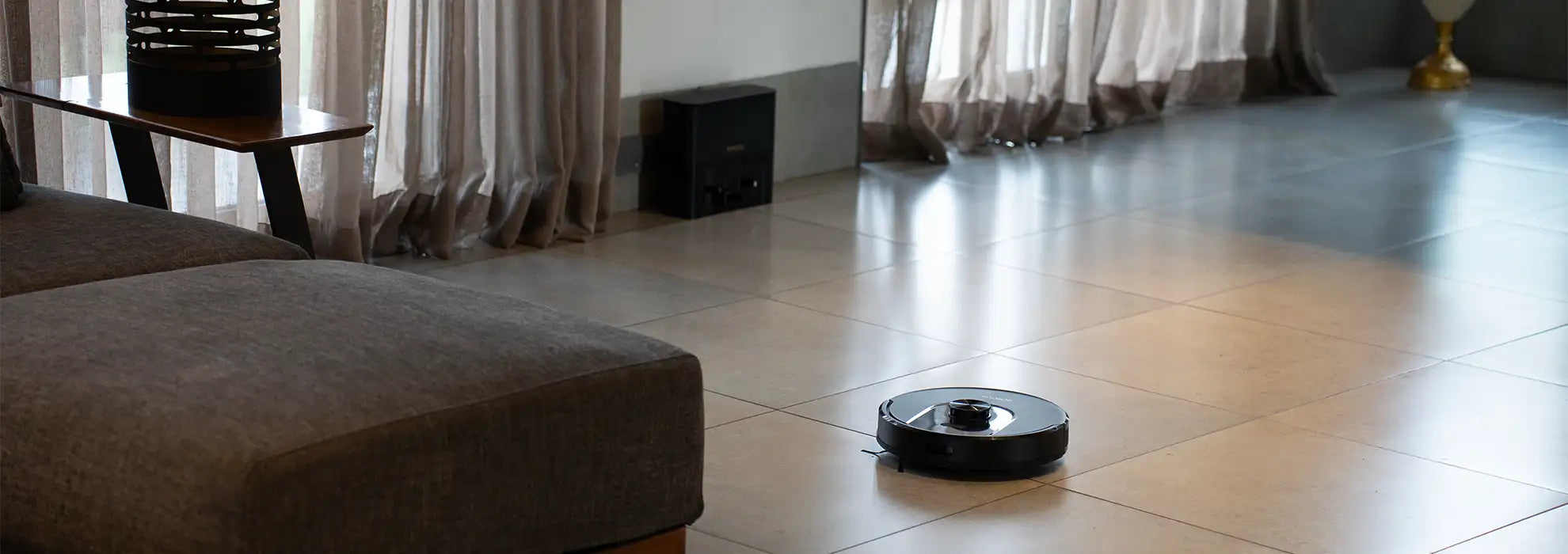
An automatic cleaning robot is designed to handle everyday floor cleaning without requiring a person to guide it, using sensors and navigation technology to map a home and clean it independently. Modern versions combine LiDAR mapping, strong suction and self-charging docks to manage dust, dirt and pet hair across different room layouts with minimal supervision. For households juggling busy schedules, an automatic cleaning robot offers a practical way to maintain consistently clean floors while freeing up time for other priorities, making it one of the more genuinely useful additions to a modern smart home setup.
What Is an Automatic Cleaning Robot
An automatic cleaning robot is a compact, self-guided vacuum device that moves through a home cleaning floors without needing to be pushed or directed manually. It uses onboard sensors, cameras or laser-based navigation to detect obstacles, map rooms and plan an efficient cleaning path.
Unlike a traditional vacuum cleaner, which depends entirely on manual effort, an automatic cleaning robot operates on a scheduled or on-demand basis, cleaning while the household is occupied with other tasks. Many modern models also return automatically to a charging dock once the battery runs low, and some include auto dust collection stations that empty the robot's bin after each cleaning cycle.
How Does an Automatic Cleaning Robot Work
An automatic cleaning robot typically works through a four-stage process: scanning the home, planning a cleaning route, cleaning each area, and returning to charge. Advanced sensors and LiDAR technology scan the layout of a room in real time, building a map that the robot uses to understand walls, furniture and obstacles.
Once the map is built, an onboard algorithm calculates the most efficient path to cover the space without repeating areas unnecessarily. As the robot moves, powerful suction combined with dual brushes lifts dust, dirt and debris from floors and carpets. When the battery level drops, the robot automatically navigates back to its docking station, where higher-end models also empty their dust bin into a larger station container, reducing the need for manual emptying after every clean.
Benefits of an Automatic Cleaning Robot
An automatic cleaning robot brings a level of convenience to everyday home maintenance that traditional vacuuming cannot match.
- Consistent, scheduled cleaning without needing to set aside dedicated time
- Smart mapping that adapts to different room layouts and avoids obstacles
- Auto charging and, on select models, auto dust collection for reduced manual upkeep
- Strong suction options suited to different home sizes, from compact flats to larger houses
- A practical solution for pet hair, dust and everyday debris across hard floors and carpets
Key Features to Look For
Automatic cleaning robots vary widely in capability, so a few features are worth prioritising when choosing one for a specific home.
- Navigation type: LiDAR-based mapping generally offers more accurate, efficient cleaning paths than basic sensor navigation
- Suction power: higher Pa ratings suit homes with carpets, pet hair or heavier dust accumulation
- Runtime and battery: longer runtimes suit larger homes that need more coverage per cleaning cycle
- Auto dust collection: a self-emptying station reduces how often the dust bin needs manual attention
- App control and scheduling: remote scheduling allows cleaning to run at convenient times without manual triggering
Common Challenges and Solutions
Automatic cleaning robots are generally reliable, though a few common concerns come up for first-time users.
Getting stuck on cables or thick rugs
Clearing loose cables and cords from the floor before a cleaning cycle, and checking the robot's obstacle clearance rating against thick-pile rugs, reduces the chance of it becoming stuck mid-clean.
Incomplete coverage in larger homes
A robot with a lower suction rating or basic navigation may need multiple cycles to cover a larger home properly. Choosing a model with LiDAR-based mapping and a longer runtime, such as a higher suction model built for large homes, improves single-pass coverage.
Uncertainty about maintenance requirements
Automatic cleaning robots still need periodic maintenance, including brush cleaning and filter checks. Setting a simple weekly or fortnightly maintenance routine keeps suction performance consistent over time.
Practical Applications
An automatic cleaning robot fits naturally into a range of everyday home cleaning routines.
- Daily scheduled cleaning for hard floors and low-pile carpets while the household is out
- Managing pet hair and dust in homes with cats or dogs
- Maintaining cleanliness in larger homes or offices through auto dust collection models
- Supplementing manual vacuuming for deeper cleans in high-traffic areas
Automatic Cleaning Robot Comparison
| Model | Suction Power | Best Suited For | Key Feature |
|---|---|---|---|
| Robolta R2 Pro | 5,000Pa | Small homes | LiDAR 3.0 smart mapping, up to 3 hour runtime |
| Robolta R2 Max | 7,500Pa | Large homes and offices | Auto dust collection, LiDAR-based mapping |
| Robolta R6 Pro | 12,000Pa | Large homes and pet owners | 360° laser radar with SLAM navigation, self-maintaining station |
Factors to Consider Before Choosing
A few practical checks help in selecting the right automatic cleaning robot for a specific home.
- Match suction power to home size and flooring type, favouring higher Pa ratings for carpeted or pet-heavy homes
- Consider whether auto dust collection is worth the added convenience for larger households
- Check navigation type, since LiDAR-based mapping generally offers more accurate, efficient cleaning
- Review runtime against home size to ensure a single cycle can cover the full space
- Factor in app control and scheduling features for hands-free, routine cleaning
Common Questions People Ask
Most questions around automatic cleaning robots focus on how well they handle different floor types, how much maintenance they require, and whether they suit larger homes. Understanding suction power, navigation type and runtime against the specific home layout covers the majority of what buyers want clarity on before choosing a model.
Frequently Asked Questions
1. Can an automatic cleaning robot clean both carpets and hard floors?
Yes, most automatic cleaning robots are designed to transition between hard floors and low to medium-pile carpets, adjusting suction automatically on select models to suit each surface.
2. How often should the dust bin be emptied?
Models without auto dust collection typically need the bin emptied after each cleaning cycle, while models with a self-emptying station only require the larger station container to be emptied every few weeks.
3. Is an automatic cleaning robot suitable for homes with pets?
Yes, higher suction models with strong filtration are well suited to managing pet hair and dander, particularly when paired with a regular cleaning schedule.
4. Does an automatic cleaning robot work in multi-storey homes?
Most models map and clean a single floor per session, so multi-storey homes typically require the robot to be moved between floors or, on select models, multiple maps to be saved and switched between.
5. How long does an automatic cleaning robot typically last on a single charge?
Runtime varies by model, with many automatic cleaning robots offering up to three hours or more of cleaning time before automatically returning to charge.
6. Can an automatic cleaning robot be controlled remotely?
Yes, most modern automatic cleaning robots support app-based control, allowing scheduling, spot cleaning and monitoring from a smartphone even when away from home.
Key Takeaways
- An automatic cleaning robot uses sensors and navigation to clean floors independently without manual guidance
- LiDAR-based mapping and higher suction ratings suit larger homes and pet-heavy households
- Auto dust collection reduces manual upkeep for households wanting a more hands-free experience
- Matching suction power, runtime and navigation type to home size is the most important buying factor
- Regular maintenance, including brush and filter checks, keeps performance consistent over time
Also, Read Vacuum Mattress Cleaner: Solutions for a Healthier Bedroom
Conclusion
An automatic cleaning robot brings genuine convenience to modern home living, handling the routine work of floor cleaning while households focus on other priorities. Choosing the right model comes down to matching suction power, navigation type and runtime to the specific home, whether that means a compact option for a small flat or a higher-powered model with auto dust collection for a larger house. As smart home technology continues to develop, automatic cleaning robots are likely to remain a practical, time-saving addition to everyday routines. Robolta offers a range of automatic cleaning robots built for different home sizes and cleaning needs, reflecting a broader focus on making smart cleaning genuinely effective for daily use.
Share:
Vacuum Mattress Cleaner: Solutions for a Healthier Bedroom
Home Cleaning Robot Gift for Sister This Raksha Bandhan 2026