
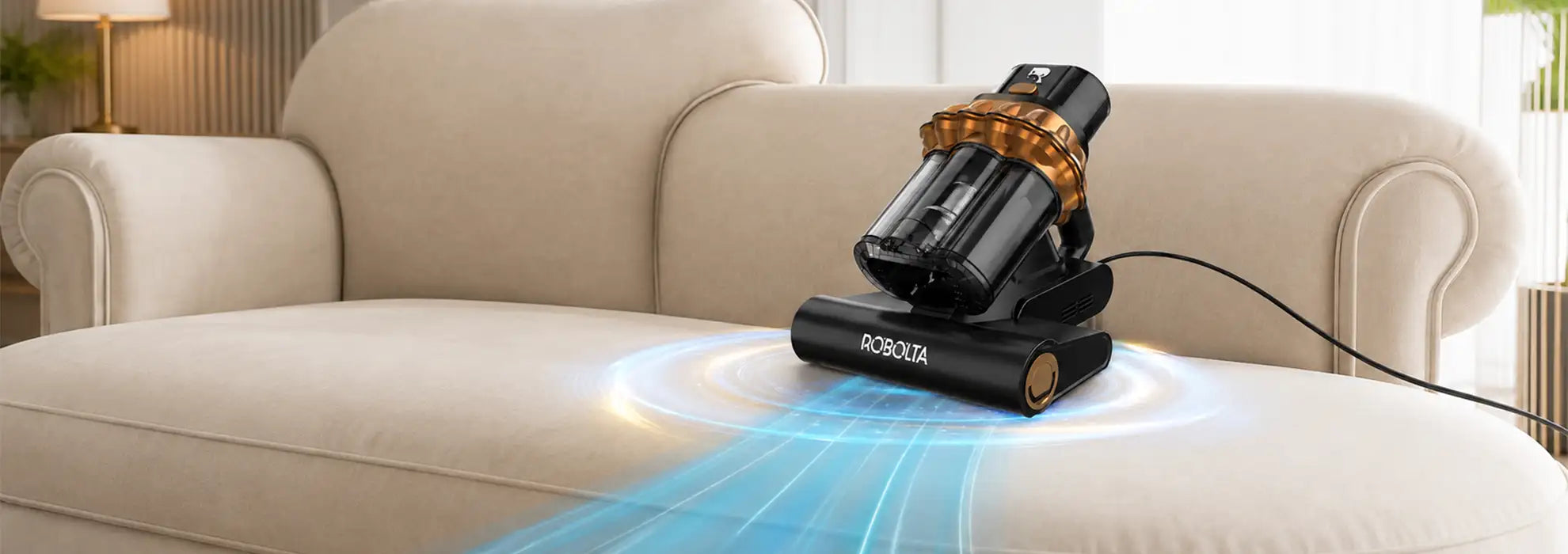
A vacuum mattress cleaner is a purpose-built device designed to remove dust mites, allergens, and hidden dirt from mattresses, sofas, and other fabric surfaces that a regular vacuum cannot clean effectively. Mattresses collect dead skin cells, dust mites, and moisture over time, even with regular bedsheet washing, which makes a dedicated cleaning tool an important part of maintaining a healthier bedroom. This guide explains how vacuum mattress cleaners work, what features actually matter, and how to choose the right one for a home.
What Is a Vacuum Mattress Cleaner
A vacuum mattress cleaner is a specialised cleaning appliance built specifically to deep clean fabric surfaces such as mattresses, sofas, cushions, and car seats, going beyond what a standard household vacuum can achieve. It typically combines strong suction with a beater or vibration head, and in many modern models, UV light or heat sterilisation, to lift and remove dust mites, allergens, and fine particles trapped deep in fabric fibres.
Unlike a general-purpose vacuum, which is designed mainly for hard floors and carpets, a vacuum mattress cleaner uses a narrower, more agitating head that is gentle on fabric but effective at loosening debris that has settled into the weave of the material.
How Does a Vacuum Mattress Cleaner Work
A vacuum mattress cleaner works by using a vibrating or rotating brush head to loosen dust and mites embedded in fabric, while a high-powered motor draws the loosened particles into a sealed dust container through a multi-stage filtration system. Many models add UV-C light or gentle heat to help neutralise dust mites and bacteria during the same pass.
The suction strength, usually measured in pascals, determines how deep the cleaner can pull debris from mattress fabric, while multi-stage or HEPA-grade filters ensure that fine allergens are trapped inside the machine rather than being released back into the air. Cordless models offer flexibility for moving between rooms, while corded versions typically provide sustained suction power for longer cleaning sessions without needing to stop and recharge.
Benefits of Using a Vacuum Mattress Cleaner
Using a vacuum mattress cleaner regularly reduces allergens, removes dust mites, and helps create a noticeably fresher, healthier sleeping surface. The benefits extend across the whole household, not just the bedroom.
- Reduces Allergy Triggers: Removes dust mites, pet dander, and dead skin cells from fabric surfaces.
- Improves Sleep Hygiene: Keeps the mattress cleaner between deep washes.
- Extends Furniture Life: Prevents dirt build-up that can damage mattress and upholstery fibres.
- Multi-Surface Cleaning: Suitable for mattresses, sofas, cushions, and car seats.
- Reduces Odours: Helps eliminate musty smells caused by trapped moisture and dust.
Key Features to Look For
The right vacuum mattress cleaner should balance suction power, filtration quality, and ease of use. A few features consistently make the biggest difference in everyday performance.
- High suction power, typically above 10,000 pascals for effective mite removal.
- Multi-stage or HEPA-grade filtration to trap fine allergens inside the machine.
- UV-C or heat sterilisation for added protection against dust mites and bacteria.
- Lightweight design that is easy to manoeuvre across mattresses and sofas.
- Transparent or easy-empty dust container for quick, hygienic cleaning.
- Low-noise operation, especially important for use in bedrooms.
Common Challenges and Solutions
A few practical issues come up when using a vacuum mattress cleaner regularly. Each has a simple fix.
Challenge: The dust container fills up quickly during a deep clean.
Solution: Empty and clean the container between mattresses or large sofas rather than waiting until the cleaning session is complete.
Challenge: Suction feels weaker after repeated use.
Solution: Check and clean the filter regularly, since a clogged filter is the most common cause of reduced suction over time.
Challenge: Cordless models run out of charge mid-session.
Solution: Choose a model with a runtime suited to mattress size, or plan cleaning around the battery's rated usage time.
Challenge: Uncertainty about how often to clean.
Solution: A weekly pass over mattresses and sofas is generally enough to maintain hygiene, with a deeper session every few weeks for heavily used furniture.
Practical Applications
A vacuum mattress cleaner is useful for far more than just mattresses, fitting into a wider fabric care routine across the home.
- Weekly mattress maintenance, especially in humid climates where dust mites thrive.
- Sofa and cushion cleaning, particularly in households with pets.
- Car seat cleaning, removing dust and allergens from fabric interiors.
- Seasonal deep cleaning before guests arrive or during festive preparations.
- Nursery and children's bedding, where allergen control matters most.
Vacuum Mattress Cleaner vs Regular Vacuum or Sun Drying
The table below compares a dedicated vacuum mattress cleaner with the more traditional methods many households still rely on.
| Method | Vacuum Mattress Cleaner | Regular Vacuum or Sun Drying |
|---|---|---|
| Dust Mite Removal | Combines strong suction with heat or UV sterilisation to target mites directly. | Sun drying reduces moisture but does not remove mites or allergens as effectively. |
| Allergen Reduction | HEPA-grade multi-stage filtration traps fine dust and allergens. | Standard vacuums are often not designed to filter allergens from fabric. |
| Convenience | Lightweight, purpose-built head glides over mattress and sofa fabric. | Regular vacuum heads are bulky and not designed for soft furnishings. |
| Frequency Needed | Weekly use is usually enough to maintain a hygienic surface. | More frequent sun drying is needed, and results vary with weather. |
| Best Suited For | Mattresses, sofas, cushions, and upholstered furniture. | Only works reliably outdoors and depends on sunlight availability. |
Factors to Consider Before Choosing
Choosing the right vacuum mattress cleaner depends on suction power, filtration quality, and how the device fits into an everyday cleaning routine.
- Suction power suited to mattress size and fabric thickness.
- Filtration quality, since multi-stage filters trap more allergens than basic filters.
- Corded versus cordless use, depending on how often the device will move between rooms.
- UV or heat sterilisation, useful for households with allergy sufferers.
- Noise level, particularly for use in bedrooms during the day.
- Ease of cleaning the dust container and brush head after use.
Common Questions People Ask
Many buyers want to know how often a mattress should be vacuumed, and a weekly session is generally sufficient to keep dust mites and allergens under control, with more frequent cleaning recommended during humid months. Another common question is whether a vacuum mattress cleaner actually removes dust mites rather than just surface dust, and models with strong suction combined with UV or heat sterilisation are generally more effective at this than suction alone. Suitability for allergy sufferers also comes up often, and a vacuum mattress cleaner with HEPA-grade filtration is usually recommended for anyone managing dust allergies or asthma at home.
Frequently Asked Questions
How often should a mattress be vacuumed?
A weekly vacuum session is generally enough to control dust mites and allergens, with more frequent cleaning helpful during humid seasons.
Can a vacuum mattress cleaner be used on sofas and cushions?
Yes, most vacuum mattress cleaners are designed for a range of fabric surfaces, including sofas, cushions, and car seats, not just mattresses.
Does UV sterilisation actually kill dust mites?
UV-C light exposure can help reduce dust mite activity and bacteria on fabric surfaces when combined with suction, though it works best as part of regular cleaning rather than a one-time treatment.
Is a corded or cordless vacuum mattress cleaner better?
Corded models generally offer sustained suction power for longer cleaning sessions, while cordless models offer more flexibility for moving quickly between rooms.
Can a vacuum mattress cleaner help with allergy symptoms?
Regular use with a HEPA-grade filter can reduce allergen levels in bedding, which may help ease symptoms for people sensitive to dust mites and pet dander.
How is a vacuum mattress cleaner different from a handheld vacuum?
A vacuum mattress cleaner uses a specialised agitating head and stronger filtration designed specifically for fabric deep cleaning, while a general handheld vacuum is built mainly for surface dust and hard floors.
Key Takeaways
- A vacuum mattress cleaner uses agitation, suction, and often UV or heat to remove dust mites and allergens from fabric surfaces.
- Regular weekly use helps maintain a hygienic, allergen-reduced sleeping surface.
- Suction power and filtration quality are the two features that matter most for effective cleaning.
- The device is useful beyond mattresses, covering sofas, cushions, and car seats.
- Cleaning the filter and dust container regularly keeps suction performance consistent over time.
Also Read: How Smart Robot Technology Is Reshaping Home Cleaning
Conclusion
A dedicated vacuum mattress cleaner offers a practical way to reduce dust mites and allergens that build up in bedding and upholstery over time, supporting a genuinely healthier bedroom rather than just a tidier-looking one. Choosing a model with strong suction, proper filtration, and consistent use makes the biggest difference to results. Robolta's range of fabric and mite care vacuum cleaners, including the F6 Max and F8 Ultra, is built with Indian homes and everyday hygiene needs in mind.
Share:
How Smart Robot Technology Is Reshaping Home Cleaning
Automatic Cleaning Robot Meets Modern Home Living